Venice
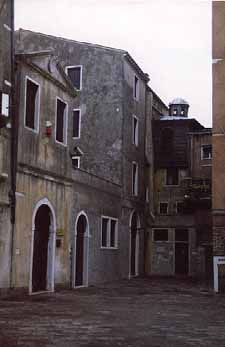
We found this area directly after the entrance into the Ghetto. The entrance still had markings from where the hinges and bolts were attached for the door that was locked from sunset to sunrise for almost 300 years. During the day, it's markets were crowded with people from all over the city and all over the world. At night, they kept a rich cultural heritage thriving. In fact, during the 16th and 17th centuries, this was home to one of the "most elegant, vivacious, and worldy Jewish communites ever to arise out of Europe." (Frommer's) Many different cultures and backgrounds were segregated to some degree. And even though this Ghetto was over-crowded and locked away at night, it was one of the few safe havens in Western Europe for Jews during those centuries of the Reformation and Counter-Reformation.The synagogues often hid their identity for fear of persecution. Therefore, they developed simple architectural designs that would help a newcomer recognize the place of worship. One of these was a cupola, as seen on this building in the back. Another was five contiguous arched windows (they symbolize the five books of the Torah).


